
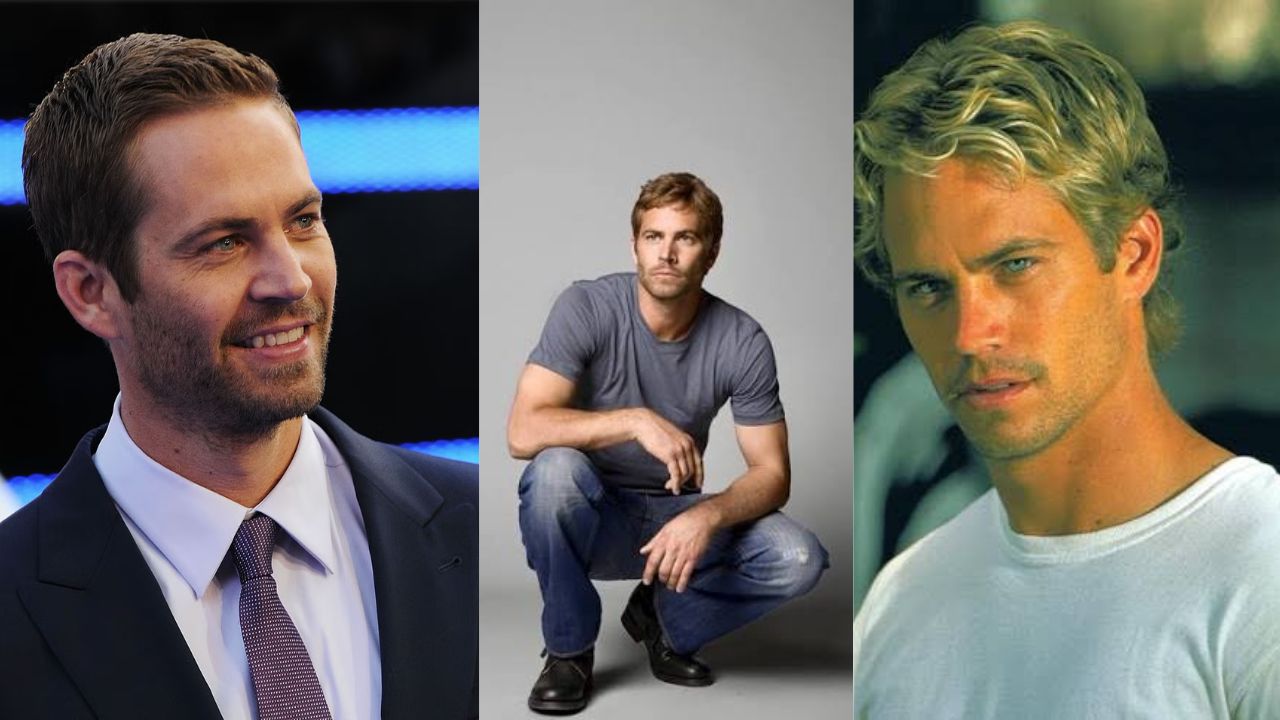
Over 2 billion people worldwide have watched at least one Fast and Furious movie, and many fell in love with the franchise because of one man: Paul Walker. On November 30, 2013, the world stopped when news broke that the beloved actor died in a tragic car accident at just 40 years old. Fans everywhere refused to believe it at first, but the heartbreaking truth soon became clear.
Paul Walker was more than just an action movie star. He was a devoted father, a passionate humanitarian, a genuine car enthusiast, and one of the most down to earth celebrities Hollywood has ever seen. His sudden death left a hole in millions of hearts, but his legacy continues to grow stronger every year.
This article will show you who Paul Walker really was beyond the movie screens. You will learn about his early life, his breakthrough with Fast and Furious, his incredible charity work, and why he still matters today. Get ready to discover the real person behind Brian O’Conner.
Who Was Paul Walker? The Man Behind the Movies
Paul William Walker IV was born on September 12, 1973, in Glendale, California. His mother Cheryl was a fashion model, and his father Paul Walker III worked as a sewer contractor. He was the oldest of five siblings in a close knit family that valued hard work and humility.
Most people do not know that Walker started acting when he was just a toddler. He appeared in television commercials before he could even read. But acting was not his first passion. Walker actually dreamed of becoming a marine biologist and loved everything about the ocean.
He attended several community colleges in Southern California, studying marine biology while continuing to act. Balancing school and auditions was not easy, but he managed both for years. Friends from that time remember him as a regular guy who loved surfing and hanging out at the beach.
What made Walker special was his personality. Co-workers and friends always said he was exactly the same person whether cameras were rolling or not. There was no fake Hollywood version of Paul Walker. He stayed humble, kind, and real throughout his entire career.
Early Acting Career: Before the Fame
Walker’s first television appearances came in the 1980s on shows like “Highway to Heaven” and “Who’s the Boss?” These were small roles, sometimes just one or two lines. But every job taught him something new about acting and helped him improve his craft.
During his teenage years, he continued working steadily in television. Shows like “Throb” and “Charles in Charge” kept him busy. The paychecks were not huge, but he was learning and staying active in the business.
His transition to film started in the late 1980s and early 1990s. “Monster in the Closet” (1986) gave him one of his first movie roles. Later, “Pleasantville” (1998) put him in front of bigger audiences as he played Skip Martin, a popular jock in a black and white TV town that slowly turns to color.
Then came “Varsity Blues” in 1999, a football drama that became a hit with teenagers everywhere. Walker played a backup quarterback, and the movie showed casting directors he could handle leading man roles. People started recognizing his face, even if they did not know his name yet.
He also appeared in “She’s All That” (1999) and “The Skulls” (2000). These movies built his resume and proved he could do romantic comedies, thrillers, and dramas. But his career defining moment was still ahead. Walker kept working and waiting for the right opportunity to break through.
The Fast and Furious Phenomenon: A Career Defining Role
Everything changed in 2001 when Walker landed the role of Brian O’Conner in “The Fast and the Furious.” He played an undercover cop who infiltrates illegal street racing culture in Los Angeles. The chemistry between him and Vin Diesel, who played Dominic Toretto, was electric from the first scene.
Nobody expected the movie to become what it did. Made on a $38 million budget, “The Fast and the Furious” earned over $200 million worldwide. Audiences loved the cars, the action, and especially the relationship between Brian and Dom. Walker became a household name overnight.
His California cool vibe was perfect for Brian O’Conner. Walker actually knew about cars and racing, so his performance felt authentic. He could actually drive those vehicles skillfully, which made the action scenes even more exciting. Directors trusted him behind the wheel in ways they could not trust most actors.
Walker appeared in six Fast and Furious movies total. “The Fast and the Furious” (2001) started it all, followed by “2 Fast 2 Furious” (2003). He returned for “Fast & Furious” (2009), “Fast Five” (2011), and “Fast & Furious 6” (2013). His final appearance came in “Furious 7” (2015), which was completed after his death using special effects and his brothers as stand ins.
What made Brian O’Conner so special was how Walker played him. Brian was tough but also caring and loyal. He struggled between doing his duty as a cop and following his heart. Fans watched him evolve from an undercover officer to a reformed criminal to a devoted family man across the series.
The relationship between Walker and the cast became real family off screen. He and Vin Diesel were genuine brothers. Tyrese Gibson, Ludacris, Jordana Brewster, and the rest of the crew all loved him deeply. That family feeling you see in the movies was not acting. Success and fame never changed how Walker treated people around him.
Beyond Fast and Furious: Other Notable Work
Walker wanted to be more than just an action star. “Into the Blue” (2005) let him combine acting with his love of the ocean. He played a treasure hunter in the Bahamas, and much of the movie was filmed underwater. It was a dream project that connected to his marine biology interests.
“Eight Below” (2006) showed a different side of his talents. This Disney family film told the story of Antarctic sled dogs surviving alone in brutal conditions. Walker played their handler, and the movie proved he could carry emotional, dramatic scenes. Kids and families discovered him through this film.
He took on darker material with “Running Scared” (2006), an intense crime thriller. “Flags of Our Fathers” (2006), directed by Clint Eastwood, gave him serious dramatic credibility. Working with Eastwood was an honor that Walker deeply appreciated.
“Hours” (2013) became one of his final completed films. Set during Hurricane Katrina, Walker played a father desperately trying to keep his newborn baby alive in a hospital without power. The quiet, emotional performance showed just how good an actor he had become. Critics praised his work, and many felt sad knowing what more he could have done.
These projects performed with varying levels of success at the box office. But they all demonstrated Walker’s dedication to growing as an actor and avoiding typecasting.
Paul Walker’s True Passion: Cars and Racing
Fast and Furious made Paul Walker famous for loving cars, but this was not acting. He genuinely loved automobiles his entire life. His personal collection included over 30 vehicles worth millions of dollars.
Walker preferred Japanese imports and American muscle cars. His garage held multiple BMW M3s, several Nissan Skyline GT-Rs, classic Ford Mustangs, and yes, Porsche Carrera GTs. He did not just collect them as investments. Walker actually knew how to work on engines and frequently got his hands dirty.
Beyond collecting, he actually raced competitively. Walker competed in the Redline Time Attack racing series and other events. Fellow racers said he would show up at car meets as a regular enthusiast, happy to talk shop with anyone. He never acted like a celebrity in those spaces.
Walker co-founded Always Evolving, a high performance auto shop in California. The business specialized in customizing and racing cars. This was not a vanity project or just slapping his name on something. He was genuinely involved in the company and passionate about the work.
His authentic car knowledge elevated the Fast and Furious movies. Stunt coordinators trusted him to perform difficult driving sequences. Much of what you see him doing on screen was actually him driving, not just sitting in a car on a trailer. The car community embraced him as one of their own, not just another Hollywood actor playing a part.
Reach Out Worldwide: His Greatest Legacy
Here is what many people do not know about Paul Walker: he was a dedicated humanitarian who founded a disaster relief organization. In 2010, after the devastating Haiti earthquake, Walker felt frustrated watching how slowly official aid moved. He decided to do something about it.
Reach Out Worldwide (ROWW) was born from that frustration. Walker gathered friends with medical training, construction skills, and other useful abilities. They flew to Haiti and started helping people immediately. No red tape, no waiting, just action.
ROWW operates differently from large charities. Teams deploy within 24 to 48 hours after a disaster strikes. They focus on immediate needs like medical care, clean water, temporary shelter, and debris removal. Walker designed the organization to be fast and efficient with very little overhead eating up donations.
He did not just write checks and put his name on the charity. Walker physically went on relief missions to disaster zones. He cleared rubble, treated injuries, distributed supplies, and slept in tents with the team. Photos show him covered in dust and dirt, smiling while helping complete strangers rebuild their lives.
ROWW responded to the Chile earthquake (2010), Alabama tornadoes (2011), Hurricane Sandy (2012), Oklahoma tornadoes (2013), and Typhoon Haiyan in the Philippines (2013). Walker was present for many of these missions personally. He felt grateful for his success and believed he had a responsibility to help people who lost everything.
Friends said giving back was important to Walker spiritually and personally. He saw suffering and simply could not ignore it. Money and fame gave him resources and platform, so he used both to make real differences in real lives.
ROWW continues operating today in his memory. His daughter Meadow Walker now serves on the board of directors. The organization has responded to dozens of disasters since his death, saving lives and restoring hope. This might be his most important legacy, even more than the movies.
Personal Life: Family, Relationships, and Fatherhood
Paul Walker became a father in 1998 when his daughter Meadow Rain Walker was born. He and Meadow’s mother Rebecca Soteros were never married. Meadow initially lived with her mother in Hawaii while Walker continued his career in Los Angeles.
When Meadow turned 13 in 2011, she moved to California to live full time with her father. This changed Walker’s life completely. Friends said Meadow became the absolute center of his world. He adjusted his work schedule, turned down projects, and made sure he was present for his daughter.
The tough action hero was a gentle, devoted dad at home. Walker attended school events, helped with homework, and made family time his priority. Being Meadow’s father meant more to him than any movie role or car collection.
At the time of his death, Walker was in a relationship with Jasmine Pilchard Gosnell. He valued his privacy and kept his personal relationships mostly out of the spotlight. Those close to him said he was happy and looking forward to the future.
Outside of work and family, Walker loved surfing, traveling, and Brazilian Jiu Jitsu. He earned a brown belt, which requires years of dedicated training. The ocean remained his happy place throughout his life. Whenever he had free time, you could find him at the beach catching waves.
Walker was raised in a Mormon family and maintained Christian beliefs as an adult. His faith influenced how he treated others and motivated his charity work. He believed in living with purpose and leaving the world better than he found it.
November 30, 2013: The Day That Shocked the World
Paul Walker attended a charity event for Reach Out Worldwide on November 30, 2013, in Santa Clarita, California. The event raised funds to help victims of Typhoon Haiyan in the Philippines. He was happy, smiling, and doing what he loved: helping others.
After the event, Walker left as a passenger in a red 2005 Porsche Carrera GT. His friend and financial advisor Roger Rodas was driving. The car crashed into a concrete lamp post and two trees on Hercules Street. Both men died at the scene when the vehicle burst into flames. Paul Walker was only 40 years old.
The Los Angeles County Sheriff’s Department investigated thoroughly. Their official report concluded that speed was the primary cause of the accident. The Porsche was traveling between 80 and 93 mph in a 45 mph zone. No mechanical failures, road conditions, alcohol, or drugs contributed to the crash.
News spread on social media within minutes. Fans around the world could not believe it. Vin Diesel posted an emotional tribute photo. Tyrese Gibson rushed to the crash site and broke down in tears. The entire Fast and Furious family was devastated.
Memorials appeared at the crash location almost immediately. Fans left flowers, candles, and heartfelt messages. Car enthusiasts organized tribute cruises. The outpouring of grief showed how many lives Walker touched. He was not just a movie star to people. He felt like a friend.
A private funeral was held on December 14, 2013, at Forest Lawn Memorial Park in Hollywood Hills. Only family and close friends attended. Vin Diesel gave a moving eulogy. The service celebrated Walker’s life and all the good he did rather than focusing on the tragedy.
Meadow Walker later filed a wrongful death lawsuit against Porsche, claiming design defects in the Carrera GT. Porsche denied the allegations. The case eventually settled out of court in 2017 with terms that were not disclosed publicly.
Completing Furious 7: A Tribute to a Brother
When Paul Walker died, “Furious 7” was in the middle of production. The filmmakers faced an impossible decision: cancel the movie or find a way to finish it respectfully. After careful thought, director James Wan, Universal Pictures, and the cast decided to complete the film as a tribute.
The script was rewritten to give Brian O’Conner a proper goodbye. Walker’s brothers, Caleb Walker and Cody Walker, agreed to help finish his remaining scenes. They served as stand ins, wearing the same clothes and mimicking his movements. Visual effects artists then used CGI and previous footage to complete the performance.
The work was done carefully and lovingly. Every choice honored Walker’s memory and what he would have wanted. The cast struggled emotionally but pushed through because finishing felt like the right thing to do.
The final scene of “Furious 7” is perfect. Brian and Dom drive side by side one last time on a coastal highway. Their cars reach a fork in the road. Brian’s white car turns off onto a different path as Dom watches and smiles. The camera pulls back showing them going separate ways as the sun sets. Wiz Khalifa and Charlie Puth’s song “See You Again” plays over the footage. The screen fades to white with the simple dedication: “For Paul.”
Audiences worldwide cried in theaters. The ending was bittersweet but hopeful. It honored Walker while giving Brian O’Conner the happy ending he deserved: driving off into the sunset to be with his family. Fans got to say goodbye properly.
“Furious 7” became a massive success, earning over $1.5 billion worldwide. It became one of the highest grossing films of all time. Much of that success came from fans wanting to celebrate Walker’s life and see his final performance. “See You Again” became a cultural phenomenon with over 5 billion views on YouTube, making it one of the most viewed videos ever created.
The Paul Walker Foundation and Meadow’s Mission
Meadow Walker was only 15 years old when her father died. Losing him was devastating, but she decided to honor his memory by continuing his work. In 2015, she established the Paul Walker Foundation to carry on his legacy.
The foundation focuses on ocean and wildlife conservation, awarding grants and scholarships to students pursuing marine science education. This honors Walker’s lifelong love of the ocean and his original dream of becoming a marine biologist. The mission connects directly to who he was at his core.
The Paul Walker Foundation has awarded numerous scholarships to deserving students studying marine biology, oceanography, and related fields. They also support ocean conservation projects and marine wildlife protection efforts. Every grant and scholarship helps make Walker’s dream real through other people.
Meadow Walker has grown into a successful model and activist in her own right. She keeps her father’s memory alive through the foundation, ROWW, and her social media presence. Her posts about her dad show their close relationship and how much she misses him. But she handles his legacy with remarkable grace and purpose for someone so young.
Special projects have included collaborations with the automotive world. A limited edition Porsche 911 was created in Paul Walker’s honor, with proceeds benefiting the foundation. The car community continues finding ways to celebrate his memory while supporting causes he cared about.
Meadow embodies her father’s values every day. She is humble, hardworking, and dedicated to helping others. Paul Walker would be incredibly proud of the woman she has become.
Cultural Impact: How Paul Walker Changed Hollywood
Paul Walker helped change car culture in movies forever. Before Fast and Furious, most car films focused on NASCAR or classic American muscle. These movies made street racing and Japanese import cars mainstream and cool. A whole generation of car enthusiasts was born because of these films.
He also changed what action heroes could be. Walker showed that leading men could be tough but also sensitive and caring. Brian O’Conner cried, showed fear, loved deeply, and valued family above everything. This was different from the invincible, emotionless action stars of previous decades.
Walker’s approach to fame influenced how younger actors handle celebrity today. In an era of social media oversharing, he maintained privacy and normalcy. You could be successful without being flashy. Fame did not require losing yourself or becoming fake.
His hands on charity work inspired other celebrities to get more involved. ROWW showed that stars could do more than write checks and attend fundraising galas. They could physically help, get dirty, and make immediate differences. Several actors have since created similar organizations modeled after what Walker built.
The car enthusiast community holds annual Paul Walker tribute meets worldwide. Enthusiasts modify their cars to honor him, often recreating his movie vehicles. The blue Nissan Skyline GT-R from “2 Fast 2 Furious” became an icon because of him. His influence on car culture extends far beyond the movies.
References to Paul Walker appear constantly in music, art, and other films. New generations discover him through streaming platforms. Kids who were not even born when he died now watch Fast and Furious movies and fall in love with Brian O’Conner. His cultural impact has not faded one bit.
Lessons from Paul Walker’s Life
Paul Walker’s life teaches us about staying humble despite success. Fame and wealth never changed his core values or how he treated people. He remained the same genuine guy from Glendale, California, whether he was worth $100 or $25 million. That kind of consistency is rare in Hollywood.
He showed the importance of following your passions. Walker loved cars and the ocean, and he found ways to make both central to his life. He chose movie projects that meant something to him personally. Work should connect to who you are, not just provide a paycheck.
His charity work teaches us about giving back in real, tangible ways. Walker used his platform and resources to help others immediately and directly. He did not wait until retirement to make a difference. If you have the ability to help someone today, why wait?
Walker valued genuine relationships above everything else. His friendships with cast members were real and deep. He prioritized quality time with Meadow over career opportunities. People matter more than things, and he lived that belief every single day.
Living fully in the moment was another Walker trademark. He embraced adventure, took risks, and truly experienced life. Yes, his life was short, but he packed it with meaningful experiences, loving relationships, and positive impact. Quality matters more than quantity.
As Meadow grew older, Walker adjusted his career to be present for her. He understood that being there matters more than being busy. Success means nothing if you miss the important moments with people you love.
Finally, Walker taught us about authenticity. He never pretended to be something he was not. What you saw was what you got. This honesty made him relatable and beloved. In a world of carefully crafted images, being real is refreshing and powerful.
Why Paul Walker Still Matters Today
We are still talking about Paul Walker over a decade after his death because truly impactful people leave marks that do not fade. His values of authenticity, humility, and service matter more now than ever. He embodied these qualities before they became trendy social media hashtags.
The Fast and Furious franchise continues, and every new movie honors his memory. The family theme that Walker helped establish remains the heart of the series. His presence is felt in films made years after his death. Dom’s crew is still Brian’s family.
Young people discovering his work today fall in love with Brian O’Conner just like fans did in 2001. They watch the movies, learn about the real Paul Walker, and find inspiration in his story. New generations keep his legacy alive by sharing what he meant to them.
His passion for marine biology and ocean conservation connects to growing environmental awareness. The Paul Walker Foundation’s focus on marine science education matters more as our oceans face increasing threats from climate change and pollution. His dream helps protect the planet.
Walker’s model of celebrity feels refreshing compared to modern influencer culture. He proved you can be famous and still be real. No constant selfies, no manufactured drama, no desperate attempts to stay relevant. Just genuine living and authentic connection.
His story also reminds us that life is fragile and precious. Walker’s sudden death at 40 shocked people into remembering what truly matters. We are not guaranteed tomorrow. Make today count. Love people now. Help others immediately. Live with purpose.
Final Thoughts
Paul Walker was so much more than an action movie star. He was a devoted father who made his daughter his priority. He was a passionate car enthusiast who genuinely loved automobiles. He was a dedicated humanitarian who physically helped disaster victims. Most importantly, he was a genuine human being who stayed humble and kind despite fame and success.
His legacy lives on through multiple channels. The Fast and Furious films continue entertaining millions worldwide. Reach Out Worldwide keeps responding to disasters and saving lives. The Paul Walker Foundation supports future marine scientists who will help protect our oceans. His daughter Meadow carries forward his values with grace and purpose.
Walker’s death at 40 was a tragedy that cut short a meaningful life. We will never know what more he could have accomplished if given more time. But we can appreciate and learn from what he did in those 40 years. The quality of a life matters more than the length.
The best way to honor someone’s memory is to live by their example. Stay humble when success comes your way. Follow your passions with everything you have. Help others in real, tangible ways. Value relationships over possessions. Be present for the people you love. Live authentically without pretending to be someone you are not.
Paul Walker showed us that you can be successful without losing yourself. You can be famous without becoming fake. You can be blessed without forgetting those in need. These lessons matter just as much today as they did when he was alive.
Take Action Today
Visit the Reach Out Worldwide website to learn about volunteer opportunities or make a donation that directly helps disaster victims. Check out the Paul Walker Foundation to support marine science education and ocean conservation. Every contribution continues the work he started.
Watch his films again with fresh appreciation for the man behind the character. Share his story with someone who needs inspiration. Talk to your kids about what real success and genuine character look like.
Most importantly, ask yourself what Paul Walker would do. When facing a choice between helping someone and walking past, choose to help. When deciding between being real and being fake, choose authenticity. When considering what matters most, choose people and purpose over fame and possessions.
Paul Walker may be gone, but his light still shines. Let it inspire you to live better, love deeper, and leave the world a little brighter than you found it. That is the legacy of a true Hollywood icon.