
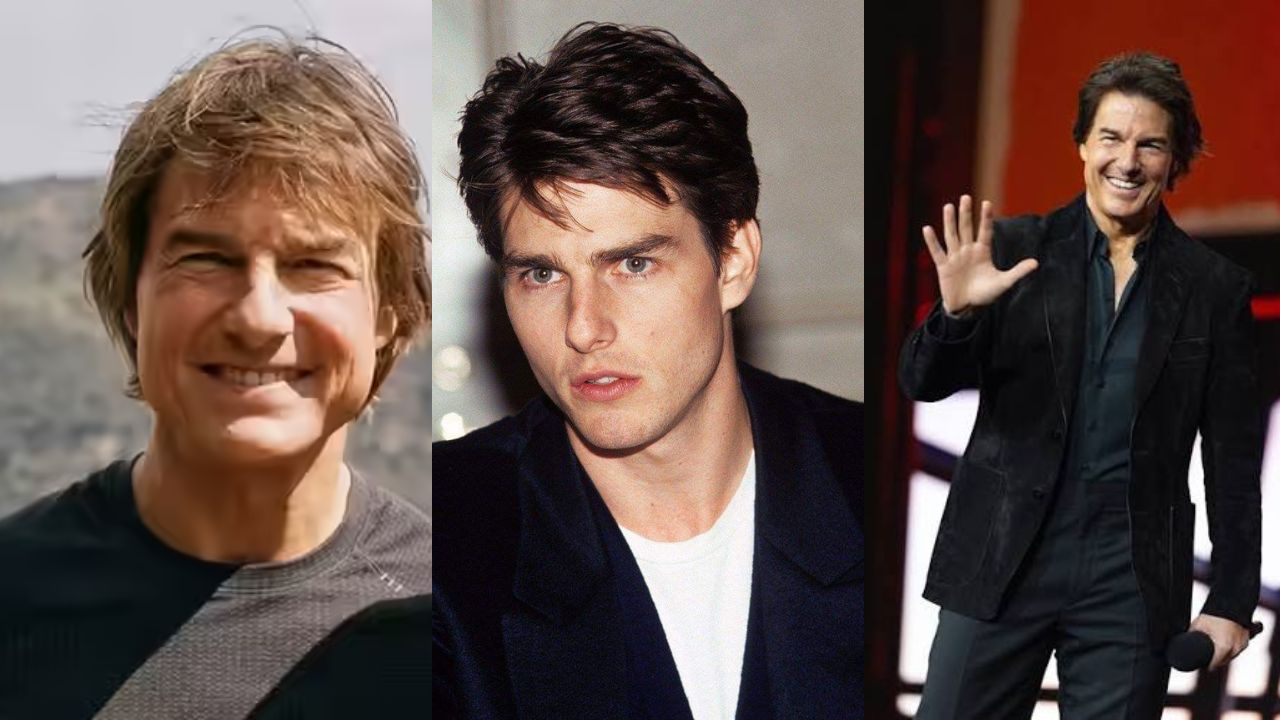
Tom Cruise films have grossed over $11.5 billion worldwide, making him one of the highest grossing actors in history. That number tells only part of the story. In an era where superhero franchises dominate and streaming services keep people home, Tom Cruise remains the only actor who can sell tickets based purely on his name. No cape, no mask, no established comic book character required.
This article explains how a kid from a broken home became the most dedicated performer in cinema. You’ll learn about the movies that made him famous, the stunts that nearly killed him, and the controversies that complicated his legacy. We’ll talk honestly about Scientology, his failed marriages, and why he seems incapable of doing anything halfway. Most importantly, you’ll understand why Tom Cruise still matters when every other movie star has faded into irrelevance.
| Category | Details |
|---|---|
| Full Name | Thomas Cruise Mapother IV |
| Born | July 3, 1962 in Syracuse, New York |
| Age | 61 years old |
| Height | 5’7″ (170 cm) |
| Net Worth | $600 million |
| Children | Isabella (adopted, 1992), Connor (adopted, 1995), Suri (biological, 2006) |
| Marriages | Mimi Rogers (1987-1990), Nicole Kidman (1990-2001), Katie Holmes (2005-2012) |
| Religion | Scientology (since 1986) |
| Film Debut | Endless Love (1981) |
| Breakthrough | Risky Business (1983) |
| Superstardom | Top Gun (1986) |
| Career Box Office | Over $11.5 billion worldwide |
| Biggest Film | Top Gun Maverick (2022) – $1.49 billion |
| Major Franchise | Mission: Impossible (7 films, $3.5+ billion) |
| Oscar Nominations | 3 (no wins in acting category) |
| Famous Stunts | Plane hanging, Burj Khalifa climb, HALO jumps, broken ankle |
| Licenses | Helicopter pilot, fighter jet pilot |
| Production Company | Producer of major franchises |
| Frequent Director | Christopher McQuarrie |
| Social Media | None |
| Current Status | Active, Mission: Impossible The Final Reckoning (2025) |
Who Is Tom Cruise and Why Does He Still Matter?
Thomas Cruise Mapother IV was born on July 3, 1962, in Syracuse, New York. His father was an electrical engineer who abused his family, and his mother worked multiple jobs after the divorce to keep food on the table. Young Tom moved constantly, attending 15 different schools in 14 years. He struggled with dyslexia and poverty, two obstacles that would have crushed most people.
What separates Tom Cruise from every other actor is simple. He works harder, takes bigger risks, and cares more about the audience experience than anyone else. While other stars demand private jets and specific bottled water, Cruise is learning to fly helicopters so a shot looks real. While others complain about long hours, he’s doing take 106 of a dangerous stunt because take 105 wasn’t perfect.
At 61 years old, he just delivered the biggest hit of his career with Top Gun Maverick. He still does stunts that terrify insurance companies. He remains committed to theatrical releases when everyone else surrenders to streaming. Tom Cruise is the last movie star because he refuses to accept that movie stars are supposed to be extinct.
The Difficult Beginning: From Poverty to Possibility
Life was hard for the Mapother family. Tom’s father moved them around the country chasing engineering jobs, never staying anywhere long enough for the kids to build friendships. The constant moving meant Tom was always the new kid, always trying to fit in. His dyslexia made school a nightmare, and his small size made him a target for bullies.
When his parents divorced, things got worse before they got better. His mother worked as a special education teacher while raising four children alone. They had very little money and even less stability. Tom threw himself into wrestling, finding an outlet for his anger and energy. He was good at it, disciplined and fierce despite his size.
An injury during his senior year of high school ended his wrestling career. His drama teacher suggested he try out for the school musical. Tom discovered he loved performing and was naturally good at it. After graduating, he moved to New York City at age 18 with the same dream as a million other kids. Unlike most of them, he made it work.
His first film role came in Endless Love in 1981, a forgettable romance where he had maybe two minutes of screen time. It was enough to get noticed. Within a year, he was cast in Taps alongside Sean Penn and Timothy Hutton. Hollywood saw something in the intense young actor with the crooked front tooth and megawatt smile.
Breaking Into Hollywood: The Movies That Built a Star
Taps in 1981 showcased Tom Cruise in a small but memorable role as a military school cadet. Francis Ford Coppola cast him in The Outsiders in 1983 alongside a group of young actors who would dominate the next decade. Matt Dillon, Patrick Swayze, Rob Lowe, Emilio Estevez, and others filled that cast, but Cruise stood out even in brief scenes.
Risky Business later that year made him a star overnight. The image of him dancing in his underwear and dress shirt to “Old Time Rock and Roll” became iconic instantly. The line “Sometimes you gotta say what the fuck” captured teenage rebellion perfectly. The film made $63 million on a tiny budget and turned Cruise into a heartthrob.
Top Gun in 1986 exploded him into superstardom. Director Tony Scott created a testosterone fueled fantasy about fighter pilots that made $356 million worldwide. The volleyball scene, the motorcycle, the aviators, the leather jacket – everything about Maverick defined cool for an entire generation. Young men wanted to be him and young women wanted to date him. The U.S. Navy set up recruiting tables in theater lobbies because enlistment jumped 500 percent.
He followed Top Gun with The Color of Money, learning from Paul Newman about how to be both a star and an actor. Cocktail in 1988 got terrible reviews but made $171 million, proving his box office power. Rain Man the same year earned him credibility, as he held his own against Dustin Hoffman’s Oscar winning performance.
Born on the Fourth of July in 1989 gave him his first Oscar nomination. Playing paralyzed Vietnam veteran Ron Kovic, Cruise disappeared into the role completely. Director Oliver Stone pushed him hard, and Cruise responded with the best dramatic work of his early career. The film made $161 million and critics finally took him seriously.
The 1990s: Becoming More Than Just a Pretty Face
Days of Thunder in 1990 reunited Tom Cruise with Top Gun director Tony Scott for a racing movie that felt like Top Gun with cars. More importantly, he met Nicole Kidman on that set. They married on Christmas Eve 1990 and became Hollywood royalty. They adopted two children, Isabella and Connor, and appeared to have a perfect life.
A Few Good Men in 1992 put him opposite Jack Nicholson in one of the most famous courtroom confrontations in cinema. “You can’t handle the truth” became a cultural touchstone, and Cruise proved he could go toe to toe with acting legends. The film made $243 million and cemented his status as a true leading man.
The Firm in 1993 paid him $12.5 million, making him the highest paid actor in Hollywood at that time. The legal thriller made $270 million worldwide. Interview with the Vampire in 1994 showed his willingness to take risks. Author Anne Rice publicly trashed his casting as the vampire Lestat, calling it a disaster. After seeing the film, she took out a full page ad in Variety apologizing and praising his performance.
Mission: Impossible arrived in 1996 and changed everything. Cruise took a producer role, giving him creative control over one of the biggest franchises in history. The Brian De Palma directed film made $457 million and created a template Cruise would follow for the next three decades. He wanted to make films where he did real stunts in real locations, giving audiences something they could never see at home.
Jerry Maguire later that year gave him a second Oscar nomination. Playing a sports agent who has a crisis of conscience, Cruise showed vulnerability and humor. “Show me the money” and “You complete me” became phrases everyone knew. The film made $273 million and proved he could carry both action spectacles and intimate character studies.
He ended the decade with two challenging films. Eyes Wide Shut was Stanley Kubrick’s final movie, a strange sexual odyssey that Cruise made with Nicole Kidman. Magnolia cast him against type as a toxic masculinity guru, earning him a third Oscar nomination. Both films showed an actor still hungry to grow and take chances.
Mission: Impossible and the Birth of the Modern Tom Cruise
The Mission: Impossible franchise represents everything Tom Cruise believes about cinema. Real stunts, real locations, real danger, real emotion. The first film in 1996 established the formula. Each sequel raised the stakes, both narratively and physically. By the time Ghost Protocol arrived in 2011, Cruise was climbing the outside of the Burj Khalifa, the tallest building in the world, with minimal safety equipment.
Rogue Nation in 2015 opened with him hanging off the side of a plane during actual takeoff. That stunt required eight takes, meaning he did it eight different times as the plane accelerated to takeoff speed. Fallout in 2018 featured a HALO jump that required 106 takes to get the perfect shot. He also broke his ankle jumping between buildings and finished the take before getting medical attention.
Director Christopher McQuarrie became his primary collaborator, directing the last three Mission: Impossible films and understanding exactly what Cruise wanted to achieve. Together they pushed practical filmmaking to its limits. Real helicopter chases, real motorcycle jumps, real fights with minimal cuts. The goal was always to put the audience in the moment with Cruise.
Seven Mission: Impossible films have made over $3.5 billion worldwide combined. More importantly, they represent his philosophy perfectly. Give audiences something they cannot see anywhere else. Make them feel the danger and the excitement. Never cheat them with obvious CGI or stunt doubles. Show up and do the work, no matter how hard or dangerous.
The franchise became his legacy, the purest expression of what he believes a movie star should be. Someone who risks everything to entertain you. Someone who trains for months to make three minutes of screen time perfect. Someone who understands that people buy tickets to see things they’ve never seen before.
Tom Cruise and Scientology: The Elephant in Every Room
Tom Cruise was introduced to Scientology by his first wife, Mimi Rogers, in 1986. The religion founded by science fiction writer L. Ron Hubbard promised answers and community. Cruise rose quickly through the ranks, becoming the most famous face of Scientology worldwide. His friendship with leader David Miscavige became central to both his personal life and his public image.
For years, he kept his involvement relatively private. That changed in the 2000s when he became an outspoken advocate. The infamous Oprah couch jumping incident in 2005, where he jumped on her couch while declaring his love for Katie Holmes, made him look unhinged. His heated interview with Matt Lauer about psychiatry went viral, with Cruise lecturing Lauer about things he clearly didn’t understand.
South Park dedicated an entire episode to mocking him and Scientology, and he reportedly tried to get Comedy Central to pull it. The more defensive he became, the more people questioned his judgment. Former Scientology members began speaking out, including Leah Remini, who produced a documentary series detailing alleged abuses within the organization.
Allegations surfaced that Scientology provided services to Cruise using member labor. Sea Org members allegedly renovated his properties, detailed his cars, and performed other tasks without proper compensation. Former members claimed the organization auditioned potential girlfriends for him, leading to his relationship with Katie Holmes.
The most painful consequence appears to be his relationship with daughter Suri. After Katie Holmes left him in 2012, reportedly sneaking away to protect Suri from Scientology influence, Cruise has had minimal contact with his daughter. Scientology’s disconnection policy allegedly prevents him from maintaining a relationship with anyone who leaves or opposes the church.
He has never backed down or explained himself publicly. While other celebrity Scientologists quietly distance themselves from the organization, Cruise remains fiercely loyal. This dedication has cost him relationships, public goodwill, and possibly career opportunities. Yet he refuses to compromise, showing the same intensity he brings to his stunts.
The Stunts That Define Him
Hanging from a plane during takeoff in Mission: Impossible Rogue Nation remains one of the most insane stunts in cinema history. The plane reached speeds of 185 miles per hour with Cruise strapped to the side. Wind, debris, and birds all posed serious dangers. He wore contact lenses to protect his eyes and held on while the plane climbed to 5,000 feet. They shot it eight times.
Climbing the Burj Khalifa for Ghost Protocol required months of training. At 1,700 feet above ground, Cruise performed running and jumping stunts outside the world’s tallest building. The safety equipment was minimal to keep shots looking real. Director Brad Bird wanted to use a stunt double, but Cruise insisted audiences would know the difference.
Breaking his ankle jumping between buildings in London should have shut down production for months. Instead, Cruise finished the take, limping back into frame before collapsing. The shot appears in Mission: Impossible Fallout exactly as it happened. He was back doing stunts weeks later, earlier than doctors recommended.
The HALO jump in Fallout required him to learn military free fall techniques. Jumping from 25,000 feet with oxygen equipment, he had to hit marks perfectly while cameras captured the sunset behind him. Weather and light conditions only allowed a few attempts per day. After 106 jumps, they got the shot they needed.
For the helicopter chase in Fallout, Cruise got his helicopter license and learned to perform aerial stunts. The spiraling dive through a canyon was him flying the aircraft while cameras captured every moment. No CGI, no tricks, just an actor willing to learn an entirely new skill for one scene.
Insurance companies hate him because the risk is real. If Tom Cruise dies doing a stunt, productions worth hundreds of millions of dollars collapse. But he argues audiences can feel the difference between real and fake. Watching him actually hang from a plane creates tension that CGI never will. His entire career rests on that belief.
His Relationships and Personal Life
Tom Cruise married Mimi Rogers in 1987 when his career was just taking off. She introduced him to Scientology, perhaps her most lasting impact on his life. The marriage lasted three years before ending quietly. Rogers later suggested that Cruise was considering becoming a monk before they met, hinting at his serious, obsessive personality.
Meeting Nicole Kidman on Days of Thunder led to his most significant relationship. They married in 1990 and adopted Isabella and Connor. For a decade they were Hollywood royalty, beautiful and talented and seemingly perfect. They made three films together and presented a united front. The marriage ended suddenly in 2001, with Kidman later saying she was “shocked” by the divorce.
Kidman rarely discusses what happened, but the timing coincided with his deepening involvement in Scientology. The children remained with Cruise and were raised in the church. Isabella and Connor are both practicing Scientologists today. Kidman’s relationship with them reportedly suffered because of Scientology’s disconnection policies.
Katie Holmes was 27 when she started dating Cruise in 2005. He was 42. Their romance was intense and public, including the notorious Oprah couch jumping. They married in 2006 at an Italian castle in a Scientology ceremony. Daughter Suri was born the same year. For six years, they seemed happy, though Holmes later described feeling controlled.
In 2012, Holmes filed for divorce suddenly and secretly. Reports suggested she used burner phones and planned her escape carefully to retain custody of Suri. The divorce was finalized quickly, with Holmes getting primary custody. Cruise has reportedly had minimal contact with Suri since then, seeing her rarely if at all. His dedication to Scientology apparently prevents a relationship with his daughter.
Currently, Tom Cruise keeps his personal life extremely private. He has been linked to various women but nothing serious or public. At 61, he seems focused entirely on work, a lonely dedication that has cost him dearly in personal happiness.
What Tom Cruise Is Actually Worth
Estimates put Tom Cruise’s net worth around $600 million. His backend deals, especially on the Mission: Impossible franchise, have made him a fortune beyond his salary. Top Gun Maverick reportedly earned him over $100 million when accounting for his producer points and backend participation. When you make a film gross nearly $1.5 billion, those percentages add up fast.
His real estate portfolio includes properties across the globe. A ranch in Telluride, Colorado serves as his primary retreat. He owns properties in Los Angeles, New York, and England. His aviation passion includes multiple aircraft and a private jet. Flying is both a hobby and a practical skill for his films.
Smart business decisions around Mission: Impossible gave him control and profits. Taking producer credits meant sharing risk but also reaping massive rewards when films succeeded. He reportedly earned $75 million for Mission: Impossible 2 alone when backend was calculated. Each sequel has been similarly profitable.
Scientology donations over the years have reportedly reached tens of millions. The church built him a custom hangar for his aircraft and provided numerous services. Whether these count as donations or compensation for his promotional value remains unclear. Former members claim he receives special treatment unavailable to regular members.
He spends money on aircraft, training, and experiences rather than flashy displays of wealth. His properties are nice but not obscene. The money funds his passions: flying, filmmaking, and apparently his religion. Unlike some stars who buy everything in sight, Cruise invests in things that matter to him.
The Top Gun Maverick Phenomenon
Thirty six years after the original Top Gun, nobody was sure if audiences still cared about Maverick. The film had been delayed multiple times because Cruise insisted on practical flying sequences that took years to prepare. When it finally released in May 2022, it became a cultural event that saved theaters during pandemic recovery.
Top Gun Maverick made $1.49 billion worldwide, becoming the highest grossing film of Tom Cruise’s career. It was the second highest grossing film of 2022, behind only Avatar: The Way of Water. Critics loved it, giving it a 96 percent Fresh rating on Rotten Tomatoes. Audiences gave it an A+ CinemaScore, the highest possible grade.
The emotional impact surprised everyone. Seeing an older Maverick dealing with mortality, legacy, and loss resonated with audiences who grew up on the original. The flying sequences were spectacular because Cruise insisted the actors actually fly in F-18s. He designed a training program that taught the cast to handle G-forces and fly fighter jets, something no film had attempted before.
This film mattered beyond money. It proved that movie stars still have value when they deliver something special. It showed that audiences will come to theaters for an experience they cannot get at home. It reminded Hollywood that practical filmmaking creates emotion CGI struggles to match. Tom Cruise made a film only he could make, and people responded.
The success cemented his legacy. After decades of dedication, risk, and controversy, he delivered the biggest hit of his life at age 59. Top Gun Maverick will be remembered as the film that proved reports of cinema’s death were greatly exaggerated.
Why Other Actors Cannot Do What Tom Cruise Does
Other actors won’t commit to the physical preparation Cruise demands of himself. Training for months to perfect a stunt, learning to fly helicopters, doing 106 takes of a dangerous jump – these things require obsession most people don’t possess. Actors want to act, not risk their lives or spend a year preparing for three minutes of screen time.
Studios forbid most stars from taking the risks Cruise takes regularly. Insurance requirements mean actors cannot hang from planes or climb skyscrapers. Cruise has enough power and produces his own films, so he makes the rules. He also accepts the financial risk if something goes wrong.
He sells tickets based purely on his name and work ethic, no superhero franchise required. Mission: Impossible is just “Tom Cruise does dangerous stuff,” and that’s enough. No established IP, no comic book source material, no nostalgia bait. Just an actor working harder than anyone else.
His dedication to theatrical experience over streaming sets him apart. While other stars happily cash Netflix checks, Cruise fights to keep his films in theaters exclusively. He called studio executives during the pandemic to argue for theatrical windows. He believes cinema deserves respect, and he backs up that belief with action.
The loneliness of his commitment seems crushing. Three divorces, estrangement from his daughter, endless criticism about Scientology – the costs have been enormous. Yet he never stops, never slows down, never compromises. That level of dedication is admirable and maybe a little sad. He has sacrificed everything normal people value to be the best at his job.
Recent Work and What Comes Next
Top Gun Maverick’s success in 2022 proved Tom Cruise remains bankable at the highest level. Mission: Impossible Dead Reckoning Part One followed in 2023 but underperformed expectations with $567 million worldwide. The film received strong reviews but faced competition and franchise fatigue. Still, over half a billion dollars is hardly a failure.
Mission: Impossible The Final Reckoning arrives in 2025, potentially ending the franchise that defined his career. Early footage suggests the stunts remain insane, with Cruise riding a motorcycle off a cliff and parachuting down a mountain. He’s 61 years old and still doing things that would terrify men half his age.
Plans to film a movie in actual space with SpaceX have been discussed for years. Cruise reportedly wants to be the first actor to shoot a scene in orbit, because of course he does. Whether this actually happens remains unclear, but nobody would be surprised if he pulls it off.
Director Christopher McQuarrie has become his primary creative partner, understanding exactly what Cruise wants to achieve. They will likely continue working together on future projects. Whatever comes next will involve practical stunts, real danger, and obsessive attention to detail.
At 61, showing no signs of slowing down, Tom Cruise remains committed to his vision of cinema. Legacy considerations probably motivate him now more than money or fame. He wants to be remembered as someone who gave audiences experiences they couldn’t get anywhere else. Based on the evidence, he’s succeeding.
What We Can Learn from Tom Cruise’s Career
Commitment beats talent when talent doesn’t commit fully. Cruise is a good actor but not the most naturally gifted. What separates him is his willingness to work harder than everyone else. He trains longer, takes more risks, and demands more from himself. That dedication compensates for any lack of raw talent.
Controlling your destiny through producing changed his career. Once Cruise became a producer, he could make the films he wanted without studio interference. He could do his own stunts, hire his collaborators, and protect his vision. Actors who only act have limited power. Producers who act control everything.
Physical preparation separates good performances from great ones. The months Cruise spends training for stunts show on screen. Audiences feel the authenticity and respond accordingly. Digital effects can create anything, but they can’t create the feeling of watching someone actually risk death for your entertainment.
Building a team and trusting them enables his success. Cruise works with the same people repeatedly because he knows they understand his standards. Director McQuarrie, stunt coordinator Wade Eastwood, and others form a unit that can execute his vision safely. Trust and collaboration make impossible things possible.
Taking care of your audience means they’ll take care of you. Cruise believes audiences deserve the best possible experience, so he delivers it consistently. That respect translates to loyalty and box office success. Top Gun Maverick succeeded partly because audiences knew Cruise wouldn’t cheat them with lazy filmmaking.
Conclusion
Tom Cruise’s journey from poverty and abuse to global icon spans over 40 years of consistent box office success. He has delivered hit after hit, franchise after franchise, proving his value in an industry that discards people constantly. The numbers speak clearly: over $11.5 billion in worldwide box office, multiple franchises, and the biggest film of his career arriving at age 59.
The controversies complicate his legacy significantly. Scientology, failed marriages, and estrangement from his daughter reveal the costs of his obsession with perfection. He has sacrificed normal human relationships to be the best at his job. Whether that trade was worth it remains an open question.
What makes Tom Cruise the last movie star is his refusal to compromise. He does the stunts himself when everyone says it’s crazy. He demands theatrical releases when streaming is easier and more profitable. He trains for months to make seconds of screen time perfect. This dedication to craft and audience experience sets him apart from every other actor working today.
His impact on action filmmaking will last long after he retires. He proved that practical stunts create emotional responses CGI cannot match. He showed that movie stars still matter if they deliver something special. He reminded Hollywood that respecting the theatrical experience pays dividends.
Support his films in theaters to show that dedication and craftsmanship still matter. Appreciate what he risks to entertain you, even if his personal choices seem strange or wrong. Recognize that greatness often comes with complications, and Tom Cruise represents both the best and the most troubling aspects of total commitment to your art. Watch Mission: Impossible The Final Reckoning when it arrives and witness the last real movie star doing what nobody else can or will do.